PART 3: NEAR MISS AT DAVIS’ CROSSROADS

This is the third installment of a reprint of an article of mine that was originally featured in the July 1998 issue of the magazine “America’s Civil War.”

As dawn crept over Pigeon Mountain on September 11, [General George H.] Thomas was relieved to see that two more of his brigades, Colonel Benjamin F. Scribner’s and Brigadier General John Starkweather’s, had arrived. [Confederate General] Hindman still delayed his advance, and the morning slipped away while Cleburne waited in vain for the sounds of Hindman’s guns–the signal for Cleburne to begin his own attack.

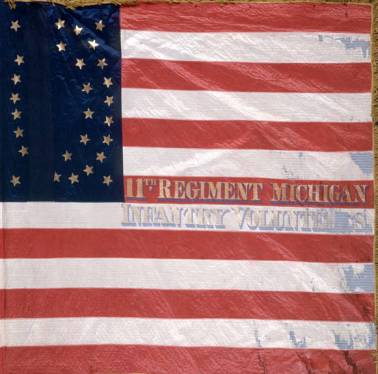
With visibility in the cove limited due to the trees and hills, [Maj. General James] Negley desperately wanted to know what was happening around him. Second Lieutenant Stephen P. Marsh of Company A, 11th Michigan [Infantry], volunteered to find out. [Sergeant James] King described the scene: “Lieutenant Marsh, at the risk of his life from the enemy’s sharpshooters, climbed a tall tree where he could gain a view of the surrounding country. General Negley and staff were under the tree and the lieutenant announced that he could see a heavy column of infantry moving around the left flank of Negley’s line.”

His fears now confirmed, Negley ordered the 2nd Division’s large supply train back to Bailey’s Crossroads. Scribner and Starkweather would withdraw as well. With these two brigades in motion, Beatty’s and Sirwell’s brigades began their retrograde movement westward, leaving Stanley’s brigade behind to buy time.

Stanley, a 53-year-old lawyer and native of Connecticut, had under his command his former regiment, the 18th Ohio, along with the 11th Michigan and another regiment that had fought at Stones River, the 19th Illinois. The brigade’s fourth regiment, the 69th Ohio, was detached to Colonel Daniel McCook’s brigade of the Reserve Corps. Together, the three regiments could barely muster 800 men.

King reported that Stanley’s brigade remained in line while the two other brigades secured strong positions in the rear. Pressed by Confederate skirmishers, Stanley’s brigade fell back across Chickamauga Creek and took up a position on a ridge in an open field adjoining the creek. One brigade member, Major Benjamin Bennet of the 11th Michigan, wrote in a letter to a Michigan newspaper, the Western Chronicle: “We soon found that we had stirred up a hornets nest. The rebels outnumbering [us] at least five to one.”

Stanley halted his command on a small north-south ridge and deployed his men. Sirwell’s and Beatty’s brigades formed on a ridge behind Stanley’s position. In his after-action report, Stanley explained: “I placed the 19th Illinois and 11th Michigan in line on the slope in front of the Fourth Indiana Battery and in rear of a fence, directing them to build breastworks of rails and stones to protect them from musketry… The 18th Ohio I placed in double column as a reserve… Battery M, 1st Ohio Artillery, was ordered to take position on the side of the hill in my rear.” Two companies of the 19th Illinois were sent forward. J. Henry Haynie, a member of that regiment, recalled, “Company I was posted to the right and front, behind a barn, while Company K was sent to the left and front, to take position behind a stone wall which commanded the road.”

The Confederates’ golden opportunity was rapidly slipping away from them. An exasperated Bragg sent Hindman a final directive: “The attack which was ordered at daybreak must be made at once or it will be too late.”

As the Southern forces pressed westward toward Chickamauga Creek and the Federal rearguard, they flushed out a company of the 24th Illinois from Starkweather’s brigade that had been left behind. The company took refuge behind the stone wall on the west side of the creek with their fellow Illinoisans of the 19th. Two members of the 24th, however, had fallen even farther behind. The Rebel yell pierced the air, coming from the woods on the creek’s east side, and the Federal troops on the ridge saw mounted Confederates in hot pursuit of the two men from the 24th Illinois. Alfred Hough described the result: “They came up cheering, thinking we were all on the next hill, but their cheering suddenly turned to wailing.” From behind the stone wall, the two combined companies delivered a devastating volley into the horsemen, unseating “all of the pursuing party who were in sight,” killing 13 and wounding several others. This put an abrupt end to any further advance on that flank.

Finally, Hindman sent his men forward. The Federals commenced firing as the Confederates crossed Chickamauga Creek. Captain Frederick Schultz’s Battery M, 1st Ohio Artillery, “opened on the enemy, firing over us with one section, and worked with good effect,” Stanley reported. On the brigade’s right flank, bayonets glistened among the tall stalks of a large cornfield. The Confederates concentrated on the flank, but Schultz’s guns raked the cornfield with canister fire, holding the Rebels at bay. Yet soon, Stanley noted, “The enemy placed a battery in position, which was well handled and did terrible execution, especially upon the 18th Ohio, which had been placed on the right flank to guard against the enemy, who appeared there in strong force.” King added, “A number of pieces of Confederate artillery were pushed forward by hand through the cornfield, followed by several lines of infantry closed en masse.”

Although the Union regiments had the advantage of the higher ground and breastworks, casualties mounted. Sergeant James Lovette of the 11th Michigan had both his legs taken off above the knees by cannon fire. Six others from the regiment would also be wounded before the engagement was over. Sergeant Elmer Bradley and newly promoted Corporal Oliver Brockway of Company K already had been captured while on picket duty that day (they would both later die at Andersonville prison).

Pressure increased from Hindman’s and Cleburne’s attacks. Confederate Brig. Gen. Patton Anderson remembered, “Never were troops in better spirit and more eager to meet the foe.”

Stay tuned for the fourth and final installment of this article.

| Leave a comment

PART 2: NEAR MISS AT DAVIS’ CROSSROADS

This is the second installment of a reprint of an article of mine that was originally featured in the July 1998 issue of the magazine “America’s Civil War.”


Alfred Lacy Hough, an officer on [Major General James] Negley’s staff, reflected years later, “We supposed the enemy were in full retreat and our object was to intercept them, but we were mistaken, their intention was to drive us out and cut us off in detail.”  General [John] Beatty watched from the top of Lookout Mountain and saw “far off to the east long lines of dust trending slowly to the south, and inferred from this that Bragg had abandoned Chattanooga and was either retiring before us or making preparations to check the center and right of our line.”

On September 10, [General] Thomas reluctantly ordered Negley to push his division across McLemore’s Cove and over Pigeon Mountain through Dug Gap.  Negley revealed his own unease by urging Brigadier General Absalom Baird to hurry his division across Lookout Mountain to support him.

That morning dawned bright, promising another hot day. McLemore’s Cove spread out before the division in cedar thickets and rolling hills.  Few people inhabited the narrow valley, which the west branch of Chickamauga Creek bisected from south to north.  Negley described the valley: “Agricultural products and water are abundant…  The country through which the road passes is peculiarly well suited for ambuscades; innumerable bridle-paths branch off, sometimes leading up the mountain.”  Confident that the nearest Confederates were at Dug Gap, across the cove, Negley rode to the head of the column.  Perhaps the beauty of the place distracted the former horticulturist, for Negley did not order any skirmishers thrown forward.  Suddenly, Confederate pickets sent bullets whining close to the general, and he wheeled back toward the vanguard–the 78th Pennsylvania of Colonel William Sirwell’s brigade–shouting to the Pennsylvanians’ commander, “Into line, Colonel!  Into line!”

The pickets belonged to the lead elements of Major General Patrick R. Cleburne’s division, which was holding Dug Gap.  Bragg had recognized the opportunity to crush Negley while he was isolated in the cove.  Three divisions under Major General Thomas Hindman were to sweep down upon Negley’s left flank from the northeast while Cleburne’s division attacked from the gap.

Bragg’s plan began to fall apart even before his troops could execute it.  Orders to Cleburne’s corps commander, Lt. General Daniel H. Hill, did not arrive until 4:30 a.m. on the 10th, hours after they were written.  Hill reported that Cleburne could be of no immediate help–not only was Cleburne’s division spread across Pigeon Mountain on picket duty, but it would also take hours to clear away the obstructions that Confederate cavalry had placed at Dug Gap.  Bragg augmented Hindman’s force with two divisions from Maj. General Simon Buckner’s corps. But these two units were farther to the north, and Hindman, leery of the size of the Federal force, halted his advance to wait for the reinforcements.

Later on September 10, Sergeant [James] King of the 11th Michigan reported, “On reaching the vicinity of [Dug Gap] it was discovered that the obstructions had been removed and that a large force of the enemy had passed through during the night and were deploying in line of battle.”  Alfred Hough added, “Until we reached a gap debouching from Pigeon Mountain we were not held in check.  Here while attempting to force our way through at Dug Gap it was discovered that the enemy were pouring over Pigeon Mountain on both our flanks.”

Cleburne had arrived earlier than his commanders had expected. Brigadier General S.A.M. Wood’s brigade made up the vanguard of the division, followed by Brigadier General James Deshler’s Texas brigade.  When a Confederate officer was taken prisoner by Negley’s forces, he warned that if the Federals advanced they would be whipped.  According to Hough, “He was so defiant in his manner and boasted so loudly that we would have our hands full before we got through the ridge that [Negley] was led to suspect what really proved to be the truth in regard to the enemy.”  Negley decided to retreat.

When Thomas arrived near Davis’ Crossroads, where Negley had set up a defensive line, he concurred with Negley’s decision to fall back from the gap.  Rumors filtered in about Hindman’s approach from the northeast.  Ever cautious, but not apt to overreact, Thomas sent orders to hurry along his remaining two divisions by way of Cooper’s Gap.

Night closed in.  Originally, the 11th Michigan held the center of Negley’s divisional line, but as King explained:  “On the morning of September 11, about three o’clock, the regiment changed position to the extreme right of the line, and upon throwing out skirmishers, the enemy was soon afterwards engaged.  A spirited contest ensued.  The enemy at daybreak attempted to turn Negley’s right and thereby cut off his line of retreat.  The 11th again changed its position to the right and rear, where it threw up a strong barricade of logs and rails.  Sections of a battery were placed upon each flank.  Meanwhile, heavy skirmishing continued along the whole line.”  Rumors swirled among the men of being outnumbered 5-to-1 by the Confederates.

Stay tuned for Part 3 of this article.

| Tagged , , , , , , , , , , , | Leave a comment

“CONGRATULATIONS! IT’S A BOOK!”

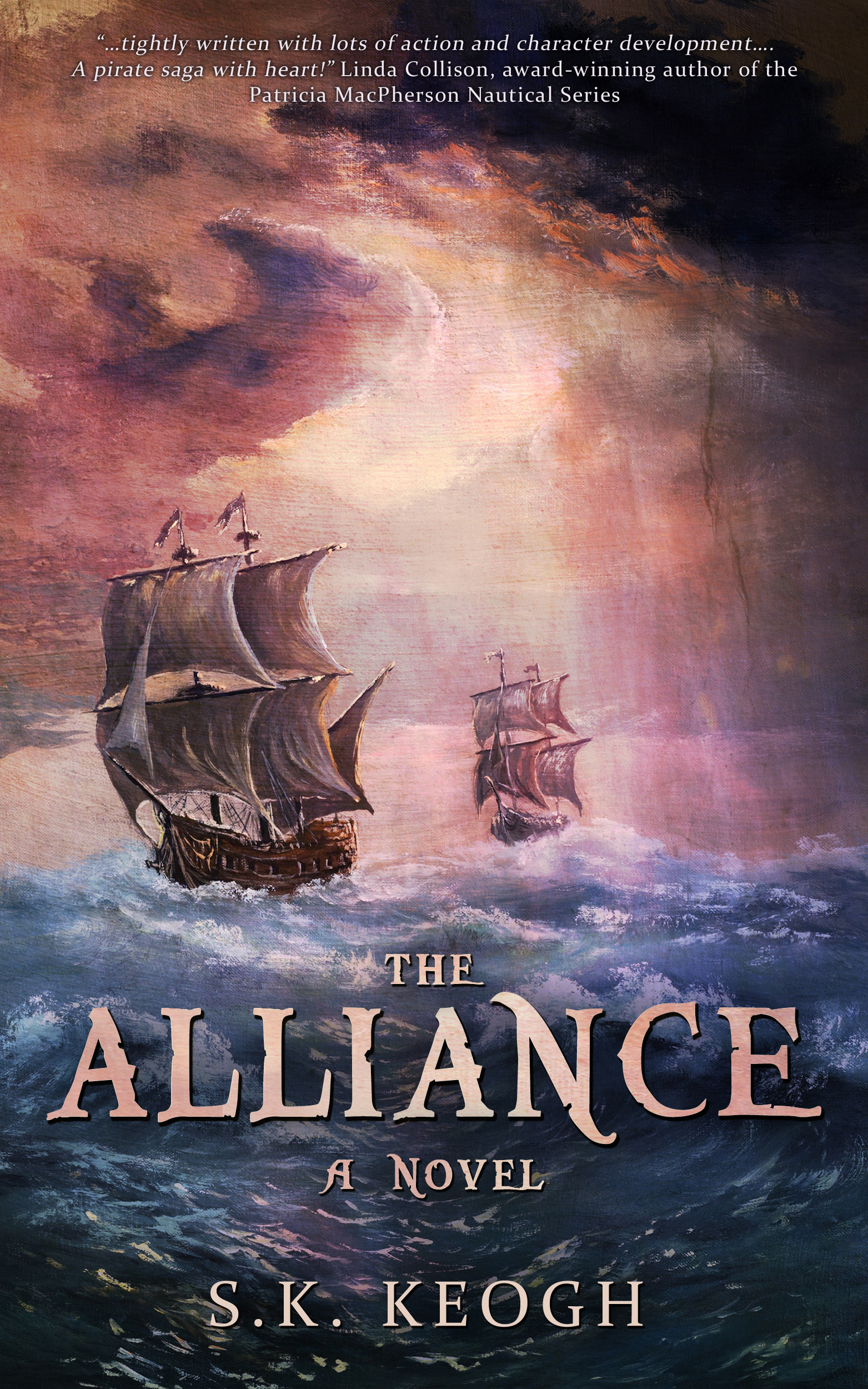
To paraphrase one of my favorite literary characters, Stephen Maturin:  “I give you joy!”  And in this case the joy is all mine.  And why is that, you ask?  Because The Prodigal has found a publishing home.

I recently signed a book deal with Fireship Press.  I’m looking forward to working with Michael James and the crew at Fireship to bring Jack Mallory to a wide audience of readers.  Those of you who know me well know this has been a long journey, so that makes this all the sweeter.

As soon as I have a release date, I will post it here.  Thanks to all who have supported my writing endeavors over the years.  And a special thanks to Alaric “Jim” Bond for championing my cause with Mr. James.  Make sure you check out his “Fighting Sail” series on Amazon.com and other bookseller websites.  I’m thoroughly enjoying the series right now myself.

Posted in The Chronicles | Tagged , , , | 3 Comments

PRELUDE TO CHICKAMAUGA

As I’ve mentioned before, I’m in the process of reworking a Civil War novel I wrote back in the ’90s (while at the same time still working on Jack Mallory’s tales), so I thought I would share an article of mine that was published in the July 1998 issue of America’s Civil War magazine. When I had originally submitted it for consideration with the magazine, they had asked me to expand it so they could use it as a feature story. Drawing from the many sources I had used while researching my novel (The Edge of Hell), I happily obliged. The article is reproduced here in parts.

This article covers a small battle that was fought prior to the battle of Chickamauga, near a remote crossroads in northern Georgia. A small battle yet, like pieces in a larger puzzle, one piece builds upon another until the larger picture is seen. I’ve always “puzzled” over how little has been written about the battle of Davis’ Crossroads, and it was this void that I hoped to fill with my article.

NEAR MISS AT DAVIS’ CROSS ROADS

“Let the memory take a step backward to September 8, 1863, and we find the 11th Michigan, the vanguard of [Major General George H.] Thomas’ army corps, on the top of Lookout Mountain at the head of Stevens’ Gap. The passage down the mountain was blocked by fallen timber. A detail was made under Lieutenant S.P.Marsh to clear the obstructions. This was done and the regiment reached the foot of the pass in [Mc]Lemore’s Cove at two o’clock p.m., it being the first Union force to reach the valley in rear of Chattanooga.”

Thus began an oration by Sergeant James W. King of the 11th Michigan Infantry. He delivered this speech years after the Battle of Chickamauga, when soldiers from both armies returned to the battlefield to dedicate their unit monuments. King knew–as did many others–that the true beginning of the great struggle in north Georgia had taken place days before the actual battle.

The 11th Michigan was indeed the first unit of Major General William S. Rosecrans’ Army of the Cumberland to descend into the valley east of Lookout Mountain and south of Chattanooga. The rest of the army was precariously spread out across the treacherous mountain passes as Rosecrans pursued General Braxton Bragg’s Army of Tennessee south from the strategic rail hub of Chattanooga. The 11th Michigan, a veteran unit of the Battle of Stones River, where it suffered 31 percent casualties, found little Confederate resistance beyond Stevens’ Gap. The regiment–numbering barely more than 400 men–pushed back the small force of Rebels confronting it.

“Toward night the command took position at the base of Lookout and formed in lines in a semicircle around the foot of Stevens’ Gap,” King recalled. “About half the command were on picket that night and the rest lay on their arms and were soon asleep. At midnight a staff officer came down the mountain with orders from [Major General James] Negley for Colonel [William] Stoughton to march his command to the top of the mountain [to rejoin the division]. Both officers and men protested, but, as the orders were imperative, the regiment formed in line and reached the summit at two o’clock in the morning [of September 9].”

Stoughton commanded the 11th Michigan. The men of the regiment held the 36-year-old lawyer from Sturgis, Michigan, in high regard. After the Battle of Stones River (December 31, 1862 – January 1, 1863), Ira Gillespie of Company A had written, “Colonel Stoughton won from his men that esteem that will last while life lasts.” A year and a half later, during the Atlanta campaign, the men of the 11th would weep as their beloved colonel, grievously wounded by a shell, was borne along the battle line. His life was saved, but he would lose a leg and leave the service. On that September night at Stevens’ Gap, Stoughton–always mindful of his men–regretted having to countermarch the regiment back up the mountain after such a long day of hard work. Stoughton would have agreed with 1st Brigade commander Brigadier General John Beatty’s assessment of travel in the area: “The roads up and down the mountain are extremely bad; our progress has therefore been slow and the march hither a tedious one.”

Colonel Timothy R. Stanley’s 2nd Brigade, to which the 11th Michigan belonged, returned to McLemore’s Cove on the morning of the 9th, followed by the balance of Negley’s division, its artillery and supply train. When Negley ordered a reconnaissance toward Pigeon Mountain, the Union forces discovered that Dug Gap was heavily barricaded and protected by an unexpected Confederate force. Isolated in McLemore’s Cove, Negley’s division fell back to the safety of Stevens’ Gap to bivouac for the night.

Rosecrans, however, wanted nothing less than continuous pursuit of the Confederate forces. He was confident that Bragg’s troops were in headlong retreat toward Rome, Georgia. Negley’s hesitancy irritated Rosecrans, who complained to Negley’s immediate superior, George Thomas, commanding the XIV Corps. Thomas supported his subordinate in correspondence to the commanding general: “The difficulties of the ascent and descent of Lookout Mountain, together with the obstructions placed in the road by the enemy were such that I do not see how it was possible for him to advance farther or more rapidly than he has.” Rosecrans, however, insisted that Thomas order Negley to continue the eastward movement toward Pigeon Mountain.

(Stay tuned for Part 2)

Posted in Research | Tagged , , , , , , , , , , | 1 Comment

AS 2011 DRAWS TO A CLOSE…

I have had a couple of interesting developments in my life during the past two weeks, one of which could very well positively impact Jack Mallory and his stories. Stay tuned to this space, and I will have more details forthcoming, hopefully, within the next couple of weeks. I’m hoping the positive end to 2011 will carry over far into 2012.

Posted in The Chronicles | Tagged | Leave a comment

TEACHING HISTORY THROUGH HISTORICAL FICTION

There was an interesting article published in The Wall Street Journal on September 21, 2011, entitled “The Education Our Economy Needs” by Norm Augustine. Mr. Augustine makes the argument that today’s high school students’ lack of knowledge in the subject of history directly correlates to “performance at nearly every level” in the work world. “A failing grade in history,” he wrote, “suggests that students are not only failing to comprehend our nation’s story and that of our world, but also failing to develop skills that are crucial to employment across sectors.”

According to the article, the federal government’s National Assessment of Education Progress found that among science, economics, history, or math, students are lacking most in history. No surprise to me. I love history but admit that my love was not nurtured in school. Instead it was nurtured by voluntarily reading both non-fiction history books as well as historical fiction.

In today’s “entertain me” society, I think historical fiction has an excellent opportunity to teach our students history. Instead of dry words in a textbook concerning, say, George Washington, a student might be encouraged to read Jeff Shaara’s two-novel treatment of the American Revolution and learn about Washington through Washington’s own point of view. More interactive, you might say. Novels make characters seem real where textbooks almost always fall short of humanizing our ancestors.

One of the reasons I wrote The Edge of Hell and hope to see it published is to humanize the average Civil War citizen soldier from small-town America. Unlike today, America’s rural setting at the start of the war was much more prevalent than the large cities that dominate our country today. Men from those small towns filled the ranks of both armies, men whose innocent country eyes ultimately witnessed scenes of violence that their peaceful upbringing could never have prepared them for.

The movie “Gettysburg” has been used in some schools as a teaching tool for the Civil War. The reason for this is because of the very real characters who populate the story, characters whose dialogue closely reflected that written in Michael Shaara’s Pulitzer Prize-winning novel The Killer Angels (the book from which the movie was born). No doubt some of the students who watched the movie were inspired to or encouraged to read The Killer Angels. And if they did they would have learned more about the reasons why men on both sides fought than if they had read three textbooks on the subject.

In Mr. Augustine’s article, he wrote: “…students who participate in National History Day–actually a year-long program that gets students in grades 6-12 doing historical research–consistently outperform their peers on state standardized tests, not only in social studies but in science and math as well.” The best research is driven by curiosity, and obviously today’s teachers need to know how to arouse that curiosity. Humanizing history is the key, something for which historical fiction writers strive.

Critics of historical fiction as a teaching tool will point out not all historical fiction is written accurately. Sometimes this is due to the fault of the writer; other times writers will tweek history in order to achieve an entertaining story. In the latter instance, most writers worth their salt will include an author’s note explaining what was altered and why. Historical fiction should never be used to replace factual history but instead to enhance it and encourage further studies by its readers (and writers).

So if you are a teacher of history, you might explore the historical fiction shelves of your bookstore or library to assist in getting your message across to students. It just might help those test scores and better prepare your students in the areas of critical thinking and communication.

| Tagged , , , , | Leave a comment

BOOK REVIEW: HIS MAJESTY’S SHIP

In keeping with my practice of reading a wide variety of authors in my genre, my latest author to sample is Alaric Bond. A while back I purchased the first book in his Fighting Sail series (via my Kindle) entitled His Majesty’s Ship.

I found Bond’s style to be very accessible for a wide range of readers, from veteran readers of Age of Sail to the newcomer. His story was well-structured and clear, following one particular ship of the British Royal Navy from life at anchor to life at sea to warfare at sea. In the latter section he did a particularly effective job with pacing.

While I’m a bit worn and jaded when it comes to the Napoleonic era, what I found refreshing about Bond’s story is his wide array of characters. Unlike so many books in this genre, Bond’s characters are not just those who walk the quarterdeck but also those below decks. And though Bond had quite a large number of viewpoint characters, I was easily able to delineate one from the other, and if I found myself a bit muddled at any one point I was quickly able to get my bearings. Bond’s point of view changes within scenes were not at all jarring as such things could potentially be.

A true measure of story/character quality is whether or not an author’s first book in a series leaves me receptive to reading the next book (and potentially the next after that). And I can say in all honesty that I will continue to read Mr. Bond’s efforts.

| Tagged , | 4 Comments